Babelnotch vs CMS translation plugins
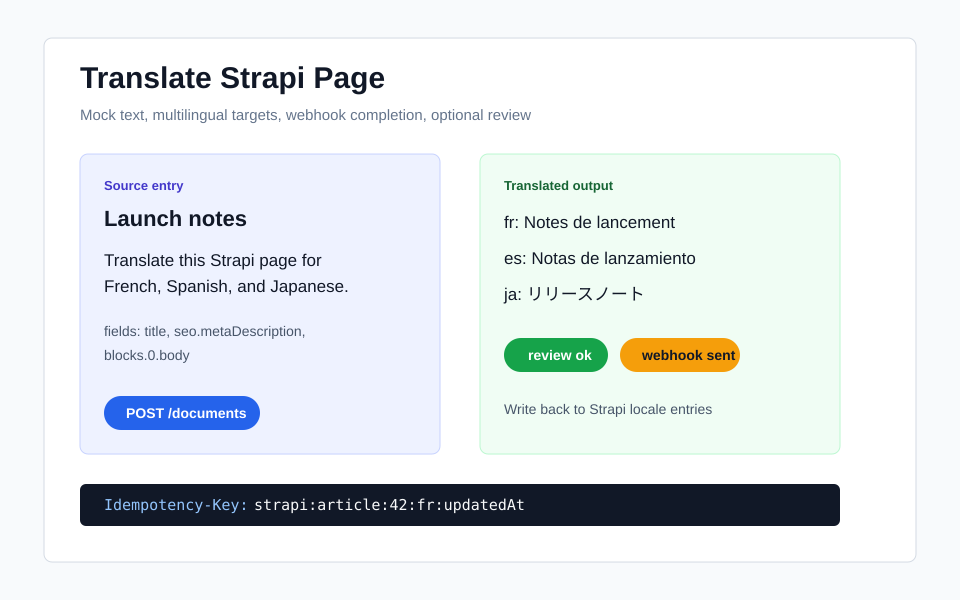
CMS plugins help editors work in one publishing system. Babelnotch adds an API-first workflow that can serve CMS pages, product strings, files, reviews, and webhooks together.
Open guideComparison
Translation becomes operational work once teams need keys, retries, review, CMS write-back, auditability, and deployment boundaries.
Buyer guides
CMS plugins help editors work in one publishing system. Babelnotch adds an API-first workflow that can serve CMS pages, product strings, files, reviews, and webhooks together.
Open guideGeneric APIs are useful for raw text translation. Babelnotch focuses on the surrounding workflow: jobs, variants, review, artifacts, webhooks, and provider visibility.
Open guideSpreadsheets are flexible for small teams, but they lose context, automation, and delivery history quickly. Babelnotch keeps the workflow keyed and repeatable.
Open guideManual review remains valuable, but the intake, routing, callback, export, and artifact steps should not depend on memory or scattered messages.
Open guideNext step
Related workflows
FAQ
When the team needs jobs, review, callbacks, artifacts, provider visibility, and reusable workflow records.
A CMS plugin can be enough for one simple website with editor-only localization needs.
No. It gives reviewers clearer intake, comparison, approval, and export paths.