Workflow examples

See what a first translation workflow can look like.

Explore realistic starting points for the content your team already manages, then choose a path worth trying with your own material.

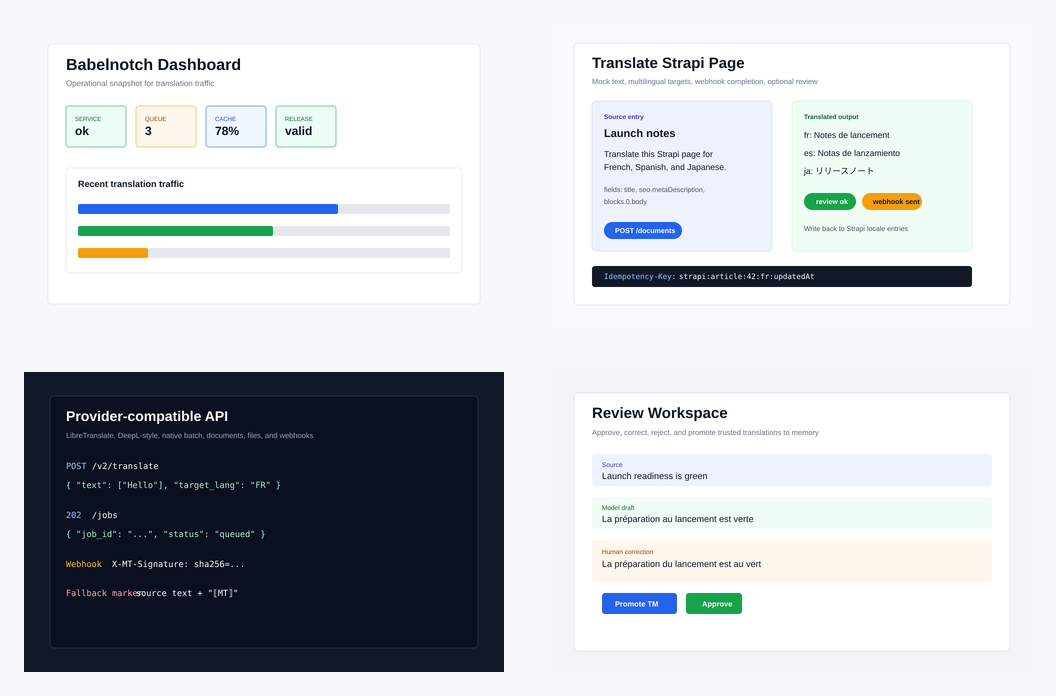
Representative Babelnotch product screens for translation, review, API workflows, and delivery

Representative scenarios

Each example starts with a familiar content problem.

These are illustrative workflows, not customer case studies or performance claims. The screenshots use representative, sanitized product data. Use them to choose a first content source, review pattern, and delivery path that fits your team.

Representative translation workspace for product release contentProduct and platform teams

A product release in more languages

Release strings, onboarding copy, and lifecycle messages often arrive from different places at the same time.

What changes: A repeatable release path your product and localization teams can use again.

Release stringsContextReviewDelivery

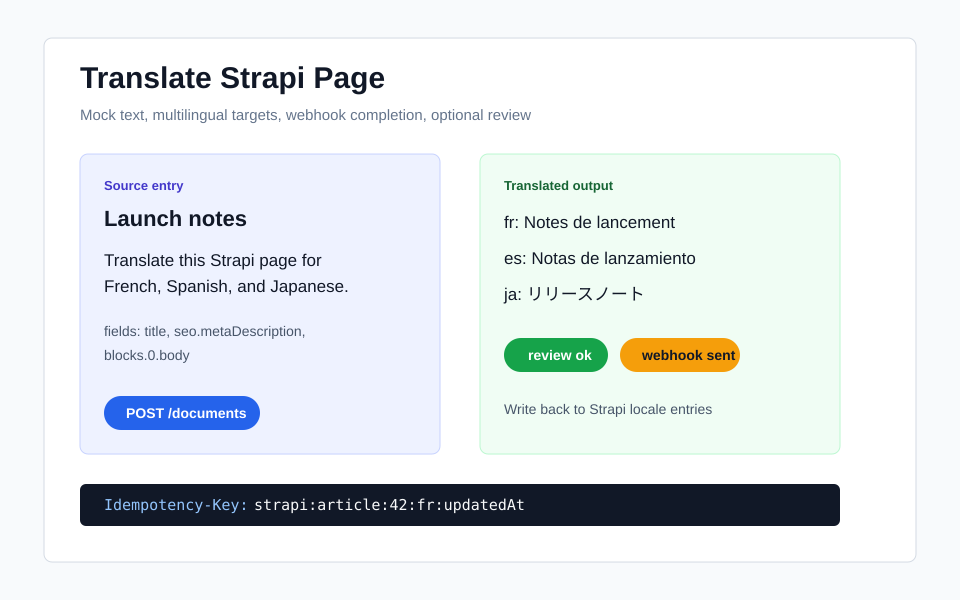
Representative content workflow from CMS intake to publishingContent and CMS teams

A campaign page ready for its next locale

A page has structured blocks, SEO fields, and editorial decisions that should not disappear into a translation handoff.

What changes: A localization process that still feels like the editorial workflow your team knows.

Page fieldsSEO copyReviewPublish
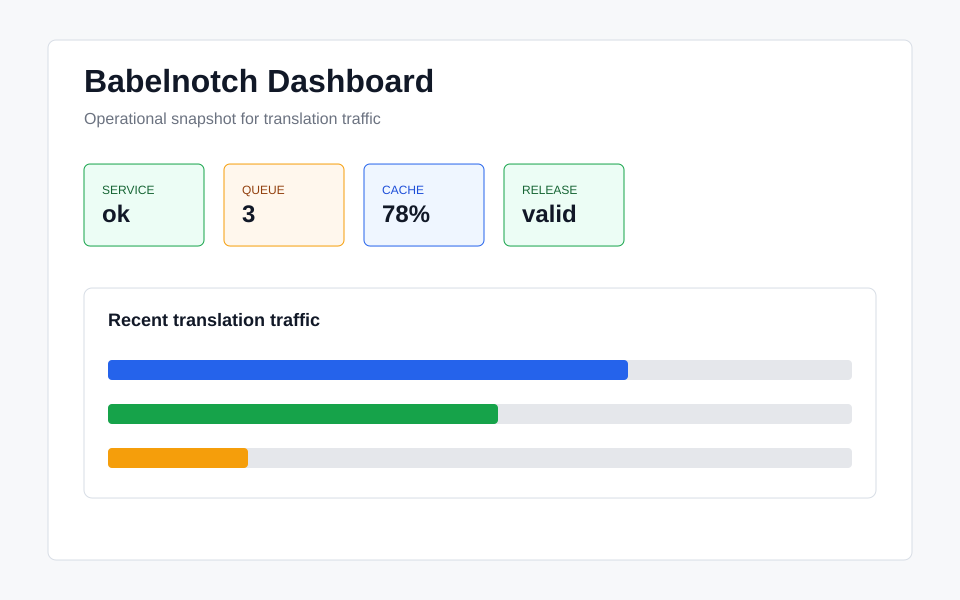
Representative dashboard for support content translation workSupport and enablement teams

A help-center update that stays coherent

Help articles, macros, and troubleshooting updates can drift when each region gets a different handoff.

What changes: A simpler way to keep support content aligned as it changes.

Article updatesTerminologyReviewHandoff
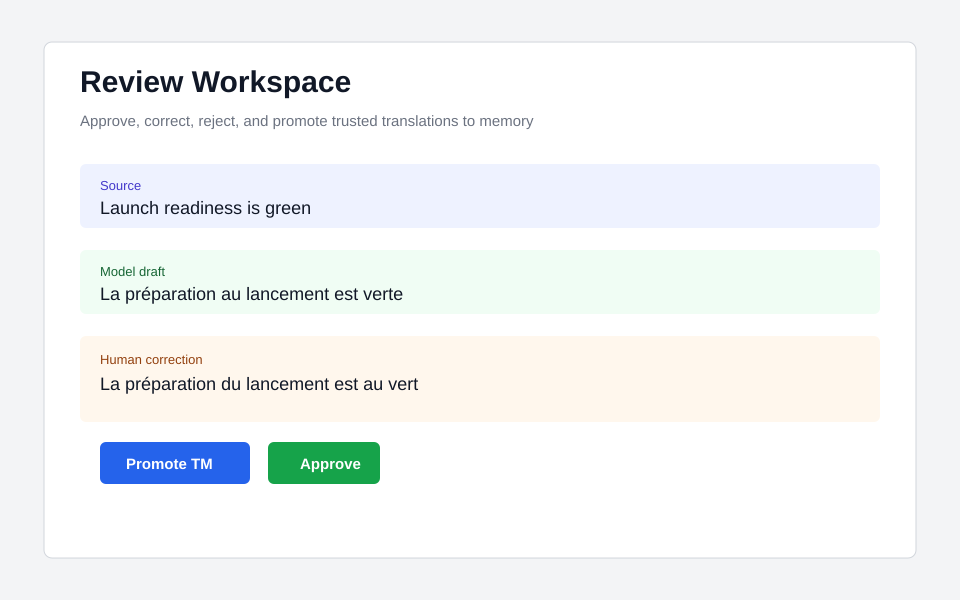
Representative review workspace for policy translationCompliance and workplace content teams

A policy update with a clear approval step

Policy and workplace guidance need a translation path that makes review decisions easy to see before publishing.

What changes: A review-friendly path for content where clarity and care matter most.

SectionsReviewer inputApprovalDelivery
Getting started

Start with one small workflow, then build from what works.

Product teams often begin with release strings. Content teams may begin with a CMS page. Reviewers can start with the approval path that makes sensitive copy easier to check.

01

Pick one content source

Start with release strings, CMS pages, help articles, or policy sections.

02

Make one review decision

Use a real piece of high-impact content to decide who needs to approve it and when.

03

Expand what works

Add the next source only after your team trusts the path from intake to delivery.

Next step

Explore the connected workflow